Choosing the best outdoor sliding doors is rarely about appearance alone. Global buyers must balance climate, security, installation quality, energy performance, and long-term maintenance. A wide glass opening may look impressive, yet it can create heat gain, drafts, or difficult cleaning problems.
No single door wins everywhere. That matters.
This guide examines leading outdoor sliding doors through practical buying criteria, including frame materials, glass construction, drainage, locking systems, and track design. Aluminum frames suit modern projects and large openings, while uPVC can offer useful insulation in colder regions. Timber provides warmth and character, but it demands more regular protection. The right choice depends on weather exposure, building design, budget, and local installation skills.
Performance claims should be checked carefully. Look for tested air, water, and wind resistance, not only attractive product images. Thermal values, glass safety ratings, corrosion protection, and warranty terms also deserve close attention. Standards differ between markets, so buyers should confirm documentation with qualified local professionals. A reliable supplier should explain replacement parts, delivery conditions, and after-sales support clearly.
Small details often decide the experience. A smooth track should remain usable after dust, rain, or salt exposure. Handles should feel firm, not decorative. Large panels also require accurate structural support and careful adjustment during installation. Even excellent doors can perform poorly when fitted badly. That is an uncomfortable truth, but it should shape every comparison of outdoor sliding doors.
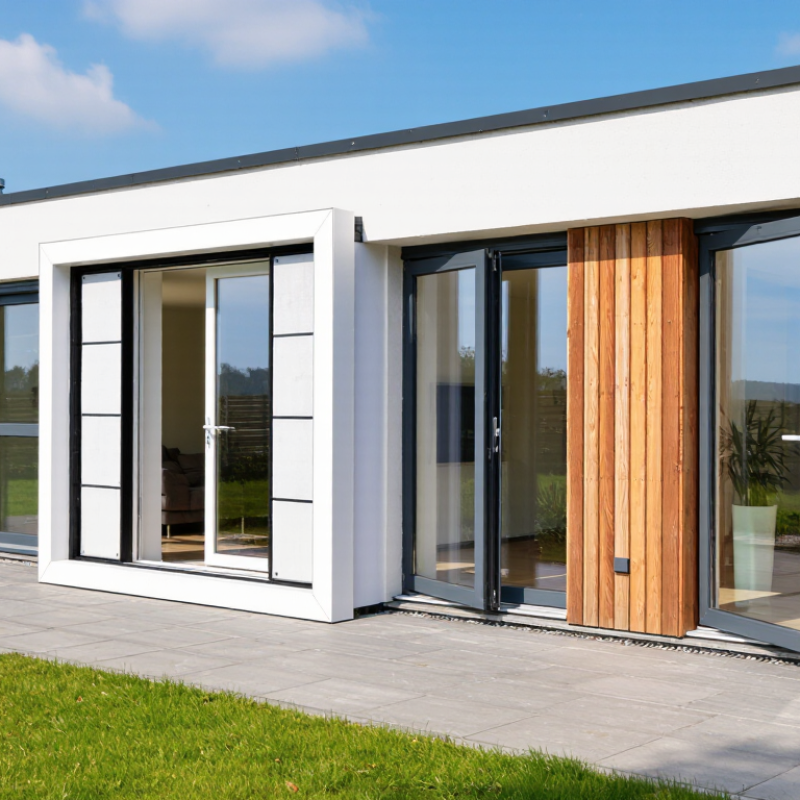
Outdoor sliding doors serve different needs, and the right system depends on opening size, weather, and daily use. Lift-and-slide doors use a handle to raise the panel slightly before movement. This reduces friction and supports large glass panels. They suit homes needing wide views, improved sealing, and occasional access to terraces. Strong rollers and accurate installation matter greatly. A heavy panel can become difficult if the frame settles.
Multi-slide systems create wider openings by moving several panels along separate tracks. Some panels stack beside a wall, while others meet at a corner. This design connects kitchens, living rooms, and outdoor dining areas. Buyers should check the stacking space, track depth, and water drainage. In windy or rainy regions, poor drainage can cause uncomfortable surprises. More glass also means more heat gain unless the glazing and shading are selected carefully.
Patio door systems usually offer a simpler balance between cost, access, and ventilation. They may include two or more panels, fixed sections, screens, and low thresholds. This option works well for balconies, gardens, and moderate-sized openings. Look for corrosion-resistant hardware near coastal areas and tested seals in cold climates. Installation experience is often underestimated. Even a high-quality door may underperform when the sill lacks support or the surrounding wall is not level. I would also question very low prices; they can hide weaker rollers, limited adjustment, or unclear maintenance support.
Performance data gives global buyers a clearer way to compare outdoor sliding doors. NFRC U-Factor measures heat transfer through the complete door assembly. Lower values generally indicate better insulation. Buyers in cold regions should examine this rating closely, especially when doors face strong winter winds. However, units may differ between markets, so compare equivalent measurements before choosing.
SHGC shows how much solar heat enters through the glazing. A lower SHGC can help homes in hot, sunny climates stay cooler.
In colder regions, a moderate or higher SHGC may provide useful passive warmth. VT, or visible transmittance, measures how much daylight passes through the glass.
Higher VT can brighten a room, but excessive daylight may create glare near pale floors or screens.
Small details matter.
Air leakage ratings deserve equal attention. Lower leakage means less conditioned air escapes around the moving panels and frame. Check that the test result covers the complete door, not glass alone. Installation can change real performance. A well-rated door may still leak if the sill is poorly aligned or the frame lacks proper sealing. That is an uncomfortable truth. Buyers should request certified test data, review local climate needs, and inspect drainage, rollers, locks, and weatherstripping. Ratings guide decisions, but they never replace careful installation and on-site verification.
For global buyers, outdoor sliding doors should be judged by their glazing system, not appearance alone. A well-built IGU uses two sealed glass panes with a dry spacer between them. The sealed cavity reduces heat transfer and limits interior condensation. Double glazing suits many climates. Triple glazing may perform better in severe cold, but it adds weight and cost.
Low-E coatings are essential for controlling radiant heat. A suitable coating can retain indoor warmth during winter and reduce solar gain during hot seasons. However, the coating position matters inside the IGU. Glass specifications should state visible light transmission, solar heat gain, and U-value. These figures reveal more than a simple “energy efficient” label. Ask for independently tested data.
Frame conductivity also affects comfort. Standard aluminum transfers heat quickly, while thermally broken aluminum uses an insulating barrier between interior and exterior sections. uPVC and fiberglass usually conduct less heat, though quality and reinforcement still matter. On-site checks often find poor sealing around the frame, even when the glass performs well. That detail is easy to miss. Buyers should inspect gaskets, drainage paths, locking pressure, and installation tolerances. A perfect specification rarely survives careless fitting. Regional humidity, strong sunlight, and salt air may also change the best material choice. Performance depends on the whole door, not glazing alone.
For global buyers, an outdoor sliding door should be judged by tested performance, not glass size or smooth showroom movement. EN 1627 classifies burglar resistance from RC1 to RC6, with each level requiring defined attack tools and test conditions. Ask whether the complete door set was tested, including frame, locks, rollers, and glazing. A certified panel alone proves little. In my site inspections, weak corner connections often mattered more than the advertised lock. That detail is easy to miss.
AAMA/WDMA 101 evaluates fenestration performance through air leakage, water penetration, and structural testing. Its performance grade should match the project’s exposure. Wind-load ratings also need local calculations. Coastal towers, open fields, and sheltered courtyards create different pressures. Check positive and negative design loads, not only a single headline number. Request test reports, product labels, installation limits, and the standard’s edition. A strong rating can still disappoint when the substrate, anchors, or drainage differs from the laboratory setup.
Tips: Confirm the required wind pressure with a local engineer. Compare the tested size with your planned opening. Inspect locking alignment after installation. Small deviations matter. Do not treat EN 1627 and AAMA/WDMA 101 as interchangeable; they address different risks. I would also leave room for review, because real buildings rarely behave perfectly.
| Evaluation Dimension | EN 1627 Security Classification | AAMA/WDMA/CSA 101 Performance Standard | Wind-Load Consideration for Sliding Doors | Recommended Buyer Evidence |
|---|---|---|---|---|
| Primary purpose | Resistance to manual burglary attempts using defined tools, methods, and attack durations. | Performance evaluation for fenestration products, including air leakage, water penetration, structural performance, operation, and forced-entry where specified. | Resistance to pressure caused by wind acting on the building envelope; the required value depends on location, building height, exposure, opening size, and local code. | Obtain a project-specific calculation or test report rather than relying only on a general product description. |
| Scope and applicability | Applies to doorsets, windows, curtain walling, grilles, and shutters, subject to the product and test configuration. | Applies to North American fenestration products when the applicable edition and product type are identified. | Must account for the complete installed assembly: frame, panels, rollers, locks, glass, fasteners, anchors, and surrounding structure. | Confirm that the tested specimen matches the proposed size, configuration, glazing, hardware, and installation method. |
| Security levels |
RC1N: basic protection against opportunistic physical force. RC2: protection against basic tools such as screwdrivers, pliers, and wedges. RC3: protection against more persistent attacks using additional hand tools and a crowbar. RC4–RC6: progressively higher resistance against experienced attackers and more powerful tools. |
Products may be identified by a performance class such as R, LC, CW, or AW, depending on the intended application and design pressure. Forced-entry performance is a separate requirement and should be explicitly stated. | A higher wind rating does not automatically mean higher burglary resistance. Security locks, anti-lift devices, interlocks, laminated glass, and tested hardware must be evaluated separately. | Request the exact classification, test configuration, test date or edition, and any limitations on panel size or glazing. |
| Attack-resistance test sequence | EN 1627 defines the classification framework. Resistance tests are commonly performed with EN 1628 static load, EN 1629 dynamic load, and EN 1630 manual attack procedures. | The applicable product standard and test methods should be identified in the certification documentation. The designation alone should not be treated as proof of forced-entry resistance. | Wind testing normally includes positive and negative pressure cycles, structural loading, operational checks, and sometimes air and water tests according to the selected standard and project specification. | Ask for complete laboratory reports or certificates showing the test methods, specimen dimensions, pressure values, and pass/fail results. |
| Typical use case | Residential, commercial, and high-security openings where resistance to forced entry is a defined project requirement. | North American residential, commercial, and architectural fenestration projects requiring standardized performance classifications. | Coastal areas, high-rise buildings, exposed sites, hurricane-prone regions, and locations subject to strong seasonal storms. | Use the security standard and the wind-performance standard together; neither one replaces the other. |
| Common wind-pressure units | EN 1627 is primarily a burglary-resistance classification and should not be used as a wind-load rating. | North American project documents commonly use pounds per square foot (psf) for design or performance pressure. | Metric conversion: 1 psf ≈ 47.88 Pa. Therefore, 30 psf ≈ 1.44 kPa, 50 psf ≈ 2.39 kPa, and ู่70 psf ≈ 3.35 kPa. | Verify whether the stated pressure is test pressure, design pressure, or ultimate pressure; these terms are not interchangeable. |
| Illustrative pressure checkpoints | Not applicable as a direct wind-pressure scale. | A performance grade or project requirement may specify a pressure value, but the required value is determined by the applicable code and project conditions. |
30 psf / 1.44 kPa: moderate exposure example. 50 psf / 2.39 kPa: higher exposure example. 70 psf / 3.35 kPa: severe exposure example. These are comparison points, not universal recommendations. |
Have the engineer or authority having jurisdiction confirm the required design pressure for each elevation and opening. |
| Glazing and panel safety | The security classification can depend on glazing type, retention, beads, frame construction, and the complete tested assembly. | Glass selection and safety glazing requirements may be governed by local building codes, human-impact rules, and the tested product configuration. | Large panels experience greater total wind force. Glass thickness, interlayer, edge support, deflection, and hardware capacity must be checked together. | Request glass make-up, safety-glazing documentation, maximum panel dimensions, and allowable deflection information. |
| Sliding-door hardware priorities | Multi-point locking, anti-lift blocks, tamper-resistant fasteners, reinforced keeper zones, and secure interlocks improve resistance when included in the tested assembly. | Rollers, tracks, locks, handles, and frame joints should be tested as part of the complete product rather than selected independently. | Track anchorage, frame reinforcement, panel stiffness, roller load capacity, and deflection control are essential for large or exposed openings. | Confirm replacement-part availability, corrosion resistance, adjustment procedures, and maintenance requirements. |
| Best selection approach for global buyers | Select the required RC level based on threat assessment and local security specifications. | Select the applicable product class and performance grade based on the governing regional code and project design criteria. | Specify both positive and negative design pressures, along with air, water, structural, and operational requirements where applicable. | Prefer independently tested, fully documented assemblies with traceable installation instructions and project-specific compliance evidence. |
Technical note: EN 1627 security classes and AAMA/WDMA/CSA 101 performance classifications address different risks. A sliding door should be evaluated against the applicable security, wind, water, air, structural, glazing, and installation requirements for its destination market. Standard editions and local code provisions may change, so the current project requirements should always be confirmed before purchase.
What Are the Top Outdoor Sliding Doors for Global Buyers?
A reliable buying matrix starts with water performance, not appearance. Request certified water-penetration results for the complete door assembly, including tracks, corners, and drainage paths. In coastal or storm-prone areas, ask whether testing reflects local wind pressure. A laboratory pass is useful, but poor installation can still cause leaks. Site conditions matter more than many brochures admit.
Energy codes differ across regions, so compare U-factor, solar heat gain coefficient, and air leakage ratings. Check whether the reported values apply to the glass, panel, or complete door. That distinction can change heating and cooling costs. Installed pricing should include framing changes, delivery, lifting equipment, flashing, and skilled labor. A low quote may hide these items. It often does.
Tips: Build a simple spreadsheet with water-test evidence, energy values, total installed cost, lead time, and warranty coverage. Ask for written exclusions. Confirm who handles damaged glass, failed rollers, finish fading, and seal replacement. Warranty length is not enough; response time and local service capacity matter. Some terms look strong but exclude coastal exposure or installation errors. I would also request references from projects with similar weather. That step feels slow, yet it may prevent an expensive correction.
Use these screening benchmarks when comparing outdoor sliding doors across global markets. Water resistance is shown as test pressure, thermal performance as maximum U-factor, and warranty coverage as years. Local building codes and supplier terms should always be verified before purchase.
Reference framework: ASTM E331/E547 water-penetration testing, NFRC U-factor measurement, EN 14351-1 performance classification, and common published warranty structures. The values are practical buyer-screening benchmarks rather than universal legal requirements.